


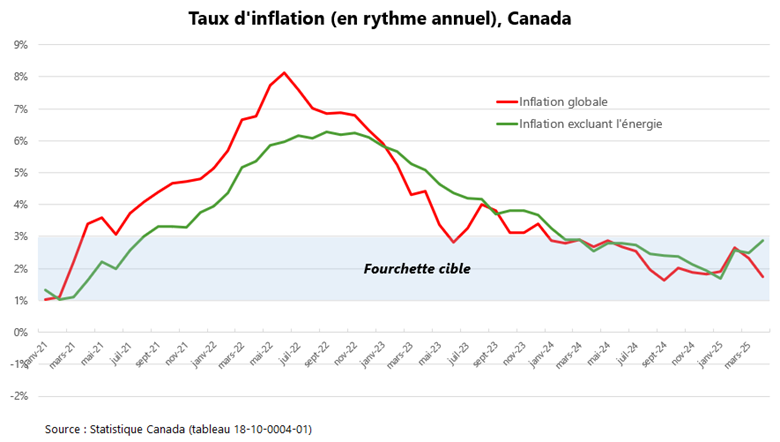
Statistics Canada reported this morning that the Consumer Price Index (CPI) rose by 1.7% year over year in April. This marks a second consecutive decline in inflation in Canada (2.3% in March and 2.6% in February) and also the lowest price increase in seven months.
However, the federal agency notes that this slowdown in inflation is mainly attributable to a sharp drop in energy prices (-12.7%). Excluding energy, the CPI actually increased (2.9% in April compared to 2.5% in March).
Gasoline prices were the main driver of this decline last month, falling by 18.1% year over year, largely due to the removal of carbon pricing. The decrease in crude oil prices also contributed to this decline, as global oil demand weakened due to a slowdown in international trade linked to tariffs.
Implications
This is unfortunately a good piece of news that isn’t really good news. Normally, a decline in the inflation rate should, on one hand, give the Bank of Canada some room to lower its policy rate on June 4, and on the other hand help reduce inflation expectations, which would ease pressure on government bond yields that influence fixed mortgage rates.
However, inflation came in slightly higher than market expectations. In addition, the rebound in inflation when energy is excluded is concerning.